

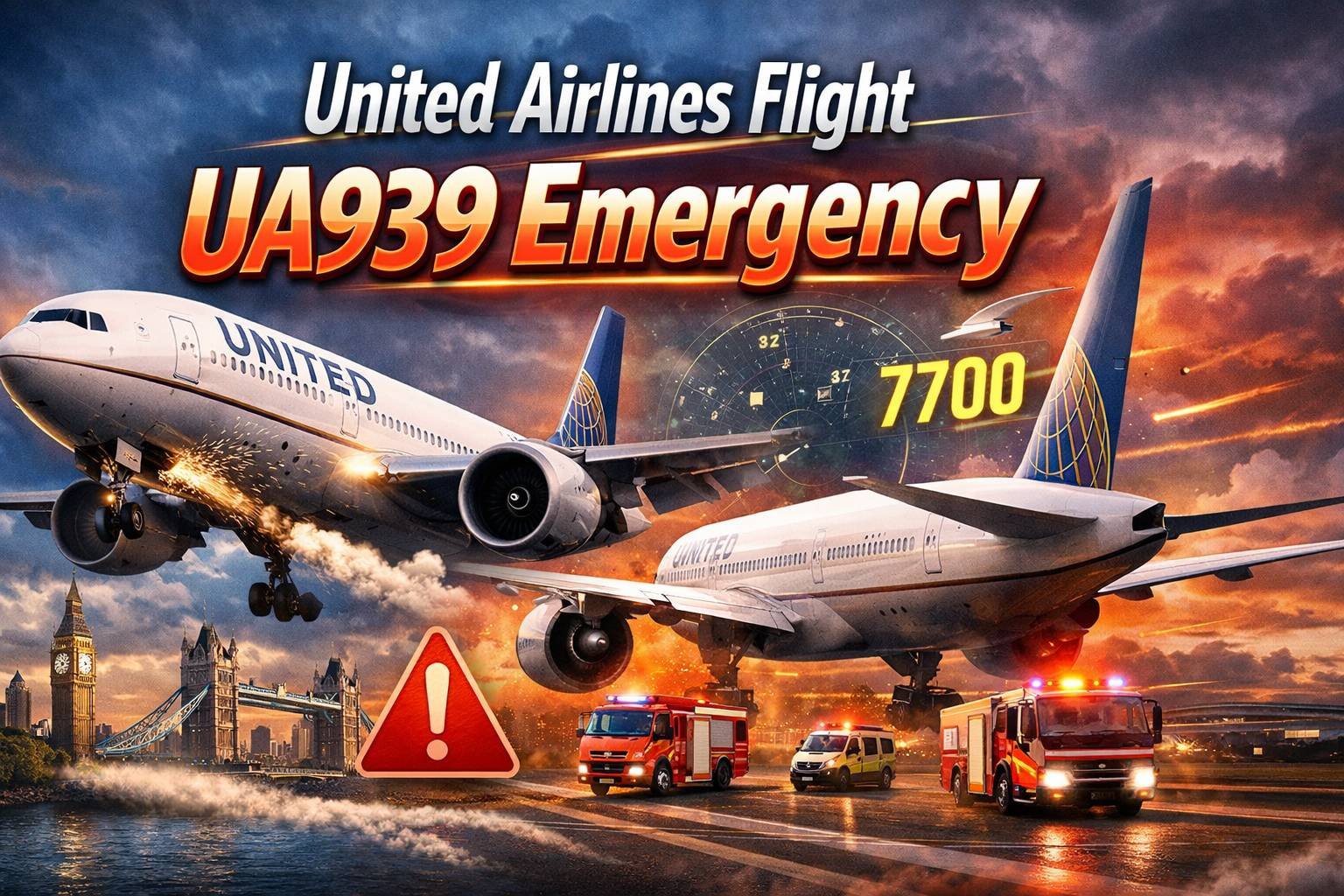
United Airlines Flight UA939 Emergency
The United Airlines Flight UA939 Emergency incident on September 28, 2025, captured global attention as a routine transatlantic flight from London Heathrow to San Francisco faced an unexpected in-flight challenge. Shortly after departure, the flight crew detected abnormal vibrations affecting the aircraft, prompting a swift declaration of an emergency and a precautionary return to Heathrow.
While the situation caused concern among passengers, the well-trained crew, modern aircraft systems, and strict safety protocols ensured that the flight landed safely with no injuries. The United Airlines Flight UA939 Emergency highlights the effectiveness of aviation safety measures and demonstrates how meticulous planning, professional training, and rapid decision-making can manage unexpected in-flight events with precision and care.
1. Flight Overview
Scheduled Service and Aircraft
-
Flight Number: UA939
-
Operator: United Airlines
-
Route: London Heathrow (LHR) → San Francisco (SFO)
-
Aircraft Type: Boeing 777‑200ER
-
Registration: N788UA
-
Passengers & Crew: 271 passengers, 13 crew members
UA939 is a long-haul international service, typically operated daily. The Boeing 777‑200ER is a trusted workhorse for transatlantic operations, known for its range, reliability, and passenger comfort.
2. Departure and Initial Flight Phase
UA939 departed London Heathrow at 16:21 BST, climbing to 31,000 feet as is typical for long-haul flights shortly after takeoff. The initial phase of flight appeared normal, with all systems functioning as expected. However, less than an hour after departure, the flight crew began noticing significant vibrations affecting the airframe and engine.
3. Detection of Abnormal Vibrations
During the climb and cruise phase, pilots identified unusual vibrations in the aircraft. These vibrations were significant enough to prompt immediate attention, as they can indicate engine irregularities, structural stress, or other mechanical anomalies. In commercial aviation, such signs are treated as potentially hazardous, requiring immediate evaluation.
Crew Response
The pilots declared an emergency by setting the transponder to code 7700, which signals a general emergency to air traffic control. UA939 entered a holding pattern near Blackpool while the crew evaluated the situation, coordinating with airline dispatch and maintenance teams on the ground.
4. Engine Precautions
Focus on the Left Engine
Reports indicated that the left-hand engine was shut down as a precaution. Shutting down an engine mid-flight is a serious decision but is supported by aircraft design, as the Boeing 777 is capable of flying and landing safely on a single operational engine.
The shutdown was part of a conservative approach, prioritizing safety while the crew assessed the situation.
Also Read: List of Champion Trees Ohio State Ohio Champion Tree Program
5. Fuel Management and Weight Considerations
When returning to an airport shortly after departure, the aircraft is often above its maximum landing weight (MLW) due to fuel loads. To safely land, the crew may dump fuel, releasing it at high altitude where it disperses harmlessly. UA939 conducted fuel dumping over sparsely populated areas before beginning its descent to Heathrow, ensuring the aircraft reached a safe landing weight.
6. Return and Emergency Landing
After holding and managing fuel, UA939 returned to London Heathrow, landing safely on Runway 27L at 18:11 BST. Emergency response vehicles were on standby, following standard protocol for declared emergencies.
Passenger Disembarkation
All passengers and crew disembarked normally. There were no injuries, and no emergency evacuation was necessary. Passengers were later rebooked on alternative flights to San Francisco.
7. Post-Landing Safety Inspections
The aircraft underwent a thorough inspection following its safe landing. Initial checks revealed no visible structural damage, but detailed analysis was conducted to determine the exact cause of the vibrations. United Airlines confirmed that the crew had followed proper safety protocols, and the aircraft remained on the ground until it was deemed airworthy.
8. Investigation and Oversight
Authorities Involved
In incidents like this, multiple agencies and organizations are involved:
-
The UK Air Accidents Investigation Branch (AAIB)
-
United Airlines’ internal safety and maintenance teams
-
Aircraft and engine manufacturers
Investigators analyzed flight data recorders (FDR), cockpit voice recorders (CVR), and maintenance records to determine the cause of the abnormal vibrations. The investigation focused on the engine and airframe systems to identify potential technical issues.
Preliminary Findings
At the time of reporting, no official cause had been publicly released. The investigation centered on the source of the vibrations, whether from engine irregularities, structural effects, or a combination of factors.
9. Aviation Safety Protocols in Action
The UA939 incident illustrates the effectiveness of modern aviation safety systems:
Pilot Training
Commercial pilots receive extensive training in handling abnormal conditions and emergencies. They are trained to make calm, precise decisions when faced with unexpected mechanical issues.
Aircraft Design
The Boeing 777 features multiple redundancies:
-
Dual engines capable of single-engine operation
-
Advanced flight monitoring and alert systems
-
High structural safety margins
These features allow pilots to respond safely to in-flight anomalies without compromising passenger safety.
Air Traffic Control Coordination
When a pilot declares an emergency, air traffic control provides priority routing and directs emergency response teams, ensuring both in-air and ground safety.
10. Contextualizing Flight Emergencies
Emergency returns to the departure airport are uncommon but not unusual. They may be triggered by mechanical issues, medical emergencies, or weather-related hazards. In all cases, trained professionals follow strict safety protocols to minimize risk and ensure a controlled resolution.
11. Passenger Experience and Public Reaction
Passengers reported feeling tense during the event but expressed gratitude for the crew’s professionalism. Public reaction highlighted both the anxiety and the reassurance passengers feel when aircraft systems and trained personnel manage unforeseen technical problems effectively.
12. Lessons Learned
Safety Is Paramount
UA939 demonstrates that aviation safety protocols are effective, prioritizing the lives of passengers and crew above all else. Precautionary measures, such as engine shutdown and fuel dumping, are integral to safe operations.
Technical Vigilance
Abnormal vibrations are always taken seriously in aviation. The crew’s prompt response exemplifies how even minor anomalies are addressed proactively to prevent escalation.
Passenger Awareness
Understanding the protocols and measures taken by flight crews can help passengers remain calm during unexpected events, providing context to procedures that may seem alarming.
Conclusion
United Airlines Flight UA939’s emergency diversion is a textbook example of modern aviation safety in action. The crew’s swift decision-making, coordinated response, and adherence to established protocols ensured that the flight returned safely with no injuries. The incident underscores the robustness of commercial aviation, where training, technology, and procedure converge to manage rare but potentially serious in-flight anomalies effectively.
Through events like UA939, both the industry and the public are reminded that modern commercial aviation is equipped to handle unexpected technical challenges safely, keeping passengers and crew at the forefront of every decision.
Frequently Asked Questions (FAQs)
1. What happened during the United Airlines Flight UA939 Emergency?
The flight, traveling from London Heathrow to San Francisco, experienced abnormal vibrations shortly after takeoff. The crew declared an emergency, shut down one engine as a precaution, and returned safely to Heathrow. No injuries were reported, and all passengers disembarked normally.
2. Were any passengers or crew injured during the incident?
No injuries occurred during the emergency. The crew followed standard safety protocols, and passengers were safely evacuated from the aircraft after landing.
3. Why did the pilots return to Heathrow instead of continuing to San Francisco?
The pilots detected unusual vibrations that indicated a potential mechanical issue. As a precaution, they chose to return to the departure airport to ensure passenger and crew safety, which is standard procedure in such situations.
4. Was the aircraft inspected after the emergency?
Yes, the Boeing 777 underwent thorough inspections following the emergency landing. Maintenance and safety teams checked the engines, airframe, and systems to identify the source of the vibrations before the aircraft could return to service.
5. How does the airline ensure safety during unexpected in-flight emergencies?
Airlines implement rigorous training for pilots and crew, redundant aircraft systems, and established emergency procedures. Coordination with air traffic control and emergency services ensures that passengers and crew are protected in any situation, minimizing risk and ensuring safe outcomes.