

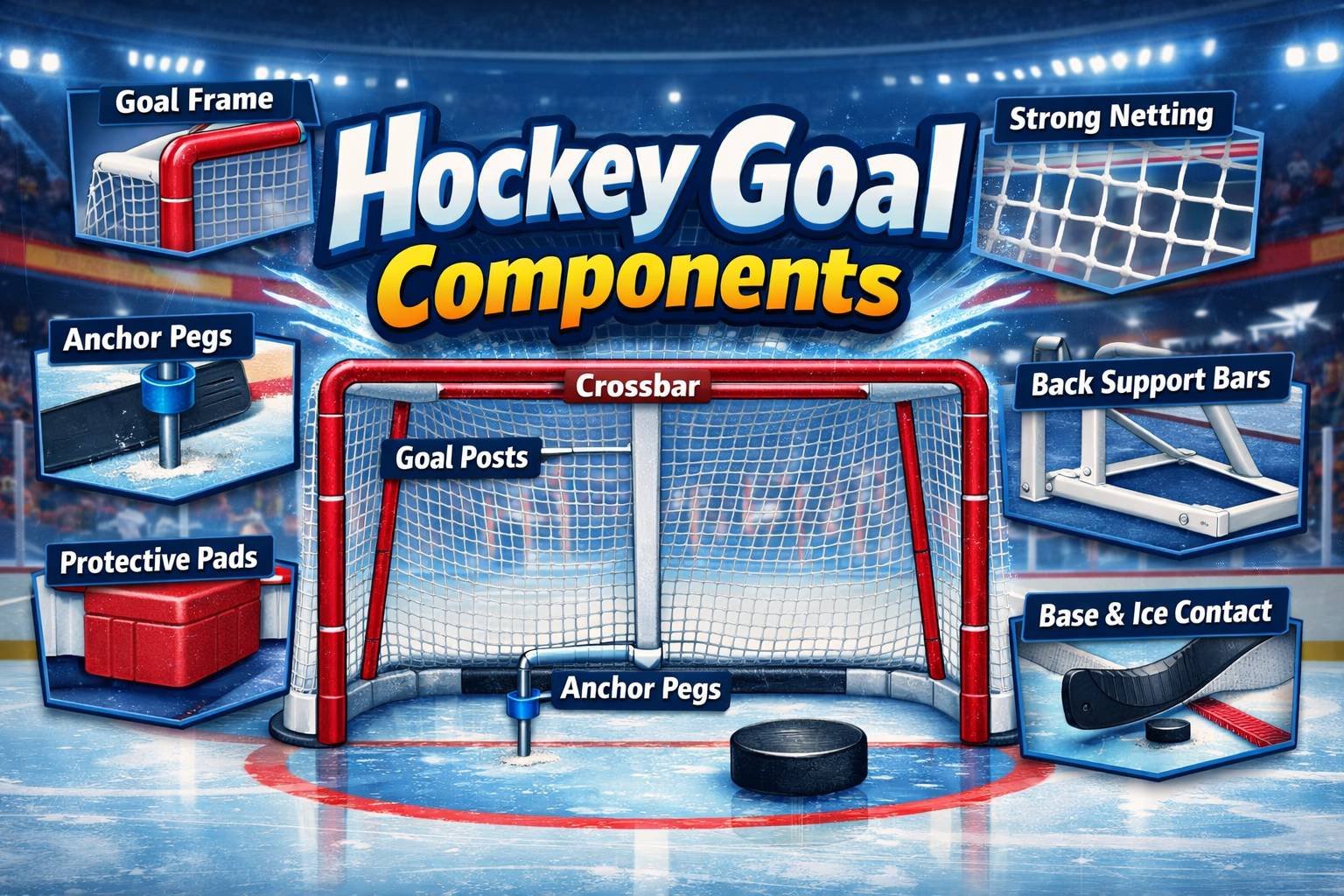
Ice hockey is one of the fastest and most physically demanding sports in the world, and at the center of every decisive moment stands a critical piece of equipment: the hockey goal. While spectators often focus on the puck, players, or goalies, the hockey goal component system plays a vital role in gameplay accuracy, safety, scoring validation, and regulatory compliance. Understanding these components is essential not only for players and coaches, but also for rink operators, sports engineers, manufacturers, and anyone involved in hockey infrastructure.
This in-depth guide explores every major hockey goal component, explaining how each part functions, how it is constructed, and why it matters within the modern game of ice hockey.
Understanding the Hockey Goal as a System
A hockey goal is not a single object but a mechanically integrated system designed to meet strict performance and safety standards. Each hockey goal component must work in harmony to ensure accurate scoring, controlled movement upon impact, and minimal injury risk.
From the steel frame to the net mesh and anchoring mechanism, every part has a specific role that contributes to the integrity of the goal structure.
Core Hockey Goal Components Explained
Goal Frame Structure
The frame is the backbone of the hockey goal. It defines the scoring area and absorbs repeated high-velocity impacts from pucks and players.
The frame consists of:
- Two vertical goal posts
- One horizontal crossbar
- A rear support frame that provides depth and stability
Frames are typically made from high-strength steel tubing, selected for durability and resistance to deformation. The exterior of the frame is often coated with high-visibility red paint, ensuring referees and players can clearly identify the goal boundary during fast play.
Goal Posts
Goal posts are the vertical components of the frame and one of the most critical hockey goal components. They define the width of the scoring area and are engineered to withstand direct puck strikes traveling at speeds exceeding 160 km/h.
Key characteristics of goal posts include:
- Cylindrical steel construction
- Uniform diameter for consistent puck rebound
- Reinforced welds at connection points
The placement and rigidity of the goal posts directly influence goal validation and puck deflection behavior.
Crossbar
The crossbar connects the two goal posts horizontally and completes the rectangular scoring frame. As a hockey goal component, it plays a vital role in defining the upper scoring limit.
The crossbar must:
- Maintain precise alignment with goal posts
- Resist bending under repeated impacts
- Remain securely welded or bolted to the posts
Even minor structural inconsistencies in the crossbar can lead to disputed goals or equipment violations.
Netting System
The net is one of the most recognizable hockey goal components, yet it is often underestimated in complexity. Its purpose is to capture the puck after a goal and prevent it from rebounding back into play.
Modern hockey nets are made from:
- High-tensile nylon or polyester
- Knotless or knotted mesh designs
- Weather-resistant synthetic fibers
The netting is attached to the rear frame and posts using laces, clips, or hook systems that allow for secure fastening while enabling easy replacement when damaged.
Net Pegs and Anchoring Mechanism
Anchoring is one of the most important safety-related hockey goal components. Goals must remain stable during normal play but release under excessive force to prevent injuries.
Most professional and amateur leagues use flexible anchoring systems that include:
- Ice pegs or magnetic anchors
- Rubber-based flexible mounts
- Breakaway designs that allow displacement upon collision
This balance between stability and release is crucial in preventing lower-body injuries to players crashing into the goal.
Rear Frame and Support Bars
Behind the main scoring frame lies the rear support structure, which gives the goal its depth and ensures the net maintains its shape.
Rear support components include:
- Bottom base bars
- Side support brackets
- Back stabilizing arcs or frames
These components ensure the net does not collapse inward and that the puck is securely retained after entering the goal.
Goal Base and Ice Contact Points
The base of the hockey goal is the part that makes direct contact with the ice surface. It distributes weight evenly and ensures proper alignment.
Base components are engineered to:
- Prevent sliding during regular play
- Integrate with anchoring pegs
- Maintain level positioning across the ice
An uneven or improperly installed base can lead to goal movement, inaccurate scoring calls, and increased equipment wear.
Materials Used in Hockey Goal Components
Material selection is critical in the design of hockey goal components. Each material must meet performance, durability, and safety requirements.
Steel Tubing
Steel is the primary material used for frames, posts, and crossbars due to its:
- High impact resistance
- Structural consistency
- Long service life
The tubing thickness is carefully regulated to ensure durability without excessive weight.
Synthetic Net Fibers
Netting materials are chosen for strength and flexibility. Nylon and polyester are commonly used due to their:
- Resistance to moisture and freezing
- High tensile strength
- Ability to absorb puck energy
These fibers ensure the net remains functional in cold rink environments.
Protective Coatings
Frames are coated with anti-corrosion paint or powder coatings to protect against moisture, ice exposure, and repeated puck impact.
Regulation Standards and Compliance
Every hockey goal component must meet strict dimensional and safety standards set by governing bodies. These standards ensure uniform gameplay across leagues and regions.
Regulated elements include:
- Goal width and height
- Frame diameter
- Net depth and mesh size
- Anchoring release force
Compliance is essential for competitive play and facility certification.
Performance Impact of Hockey Goal Components
Each hockey goal component directly affects how the game unfolds.
- Rigid frames ensure accurate goal boundaries
- Proper net tension prevents puck escape
- Anchoring systems reduce injury risk
- Stable bases maintain consistent positioning
Even small deviations in component quality can influence gameplay outcomes.
Maintenance and Lifecycle of Hockey Goal Components
Regular inspection and maintenance extend the lifespan of hockey goals and ensure continued compliance.
Maintenance best practices include:
- Inspecting weld points and frame joints
- Checking net integrity and tension
- Replacing worn anchoring pegs
- Verifying base alignment
Facilities that neglect maintenance risk equipment failure and safety hazards.
Also Read: Halle Jonah Platonic Soulmates: Deep Friendship Without Romance
Technological Advancements in Hockey Goal Design
Modern hockey goal components increasingly integrate technology to enhance officiating and performance.
Examples include:
- Embedded goal-line sensors
- Camera-assisted verification systems
- Magnetic anchoring innovations
These advancements improve scoring accuracy and reduce controversial calls.
Differences Across Hockey Variants
While this guide focuses on ice hockey, hockey goal components vary across different formats such as inline hockey and field hockey.
Key differences may include:
- Materials used for frames
- Net depth and mesh size
- Anchoring methods based on surface type
Understanding these distinctions is essential for selecting the correct equipment.
Importance for Facilities and Equipment Buyers
For rink owners, sports academies, and equipment buyers, understanding hockey goal components ensures informed purchasing decisions.
Key considerations include:
- Compliance with league standards
- Durability and maintenance costs
- Player safety features
- Long-term reliability
Choosing well-designed components reduces replacement frequency and operational issues.
Business Visibility in Sports Infrastructure
As sports technology and infrastructure continue to grow globally, businesses involved in manufacturing, installing, or maintaining hockey goal components benefit from strong digital visibility. Platforms like Techstudify Blogs help connect sports equipment providers, rink operators, and service companies through worldwide business listing and discovery services, enabling industry professionals to reach the right audiences efficiently.
Final Thought
The hockey goal may appear simple at a glance, but it is a finely engineered system composed of multiple interdependent parts. Each hockey goal component plays a precise role in ensuring fair play, accurate scoring, and player safety.
From the strength of the steel frame to the flexibility of the anchoring system, every detail matters. Whether you are a player, coach, facility manager, or equipment professional, understanding these components provides deeper insight into the game and the infrastructure that supports it.
Frequently Asked Questions (FAQs)
1. What is a Hockey Goal Component and why is it important?
A Hockey Goal Component refers to any individual part of a hockey goal, including the frame, posts, crossbar, netting, and anchoring system. Each component plays a vital role in ensuring accurate scoring, player safety, and compliance with official regulations.
2. What materials are used to make hockey goals?
Hockey goals are typically made of high-strength steel for the frame and posts, combined with durable synthetic netting like nylon or polyester. Anchoring systems may use flexible pegs or magnetic mounts to maintain stability and safety.
3. How does the anchoring system of a hockey goal work?
The anchoring system holds the goal in place during gameplay but is designed to release or move slightly upon high-impact collisions. This prevents injuries and protects both players and the goal itself.
4. Are there different types of hockey goals for various sports?
Yes. Ice hockey, inline hockey, and field hockey goals differ in size, materials, and anchoring methods. Ice hockey goals are typically made with steel frames and nylon nets, while field hockey goals may use lighter aluminum frames and different net depths.
5. How do I maintain a hockey goal to ensure longevity?
Regular maintenance includes checking frame welds, ensuring net tension is correct, inspecting anchoring pegs for wear, and verifying that the base is level on the ice. Proper care ensures consistent performance and safety over time.