

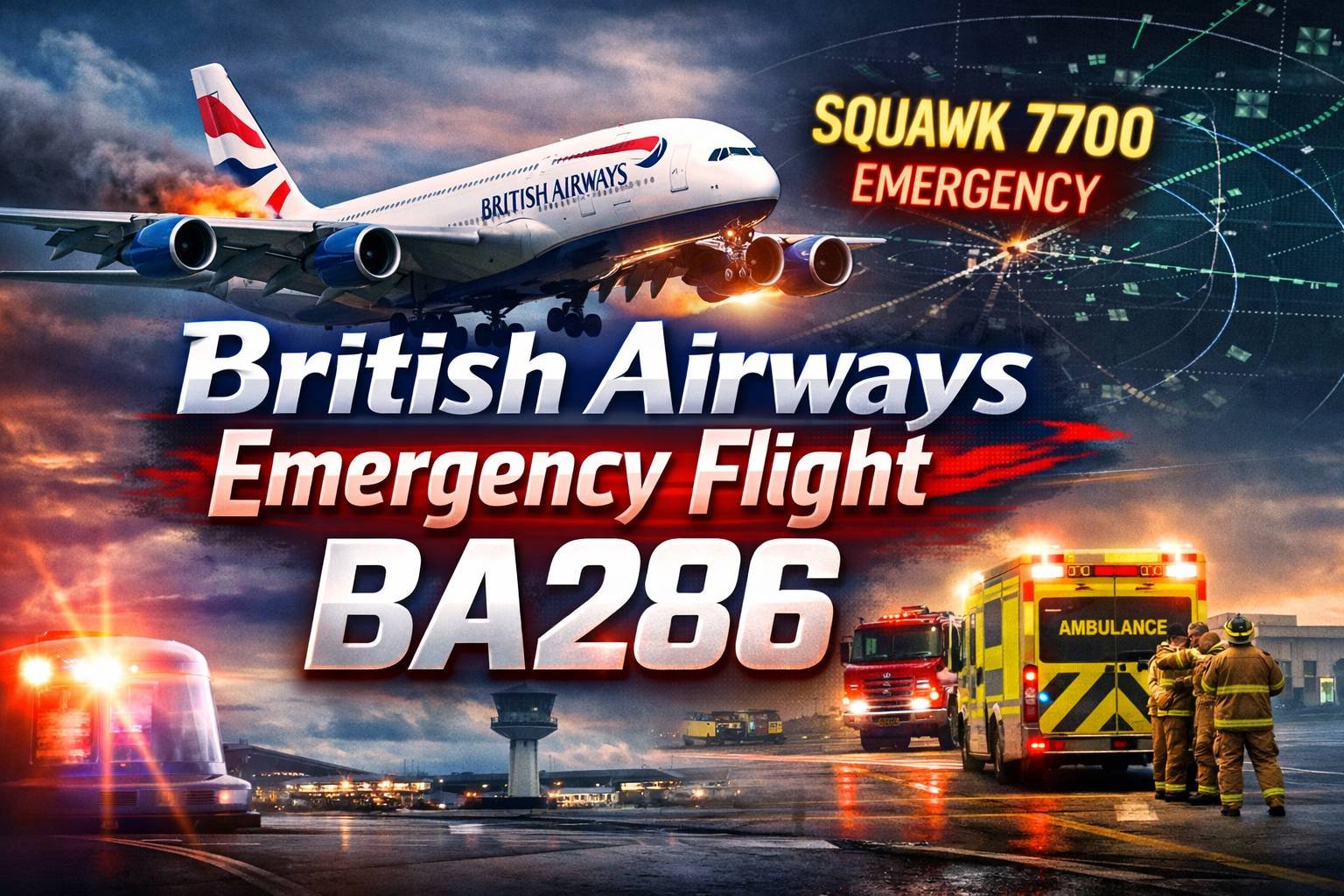
British Airways Emergency Flight BA286
British Airways Emergency Flight BA286 became a widely discussed aviation incident after the long-haul flight declared an emergency while en route from San Francisco to London Heathrow. For passengers, aviation enthusiasts, and the general public, such events naturally raise questions about what happened, why emergency procedures were triggered, and how airlines manage unexpected situations thousands of feet above the ground. This in-depth guide breaks down the BA286 emergency in a clear, factual, and accessible way, while also exploring the broader aviation systems that ensure safety during critical moments.
Overview of British Airways Flight BA286
British Airways Flight BA286 is a scheduled long-haul service operating between San Francisco International Airport and London Heathrow Airport. Typically operated using a wide-body aircraft designed for intercontinental travel, the flight carries hundreds of passengers across the North Atlantic on a route that can last over ten hours depending on winds and air traffic conditions.
Long-haul flights such as BA286 are meticulously planned, with detailed checks before departure, continuous monitoring during flight, and multiple layers of redundancy built into both aircraft systems and crew procedures. Despite these precautions, aviation professionals prepare for every scenario, including medical, technical, or operational emergencies.
What Happened on British Airways Emergency Flight BA286
During one such transatlantic journey, British Airways Emergency Flight BA286 declared a mid-air emergency. Air traffic control systems recorded the aircraft transmitting the international emergency transponder code, indicating that the flight required immediate attention and priority handling.
The declaration of an emergency does not automatically imply a catastrophic situation. In aviation, emergencies are declared as a precaution whenever the flight crew believes that safety could potentially be compromised if normal operations continue. In the case of BA286, the emergency declaration ensured that the aircraft received priority routing, landing clearance, and readiness of ground emergency services.
The flight ultimately continued toward London Heathrow and landed safely, with emergency crews on standby as part of standard operating procedures.
Also Read: Deborah Charlesworth and Associates Port Colborne
Understanding Emergency Declarations in Commercial Aviation
To fully appreciate the significance of British Airways Emergency Flight BA286, it is important to understand what an emergency declaration means in aviation terms.
What Is an Aviation Emergency?
An aviation emergency can be declared for a wide range of reasons, including:
- Medical emergencies involving passengers or crew
- Technical warnings or system irregularities
- Smoke or unusual odors in the cabin or cockpit
- Pressurization or environmental control concerns
- Operational issues requiring immediate attention
Declaring an emergency allows the crew to prioritize safety over scheduling or fuel efficiency.
The Meaning of the 7700 Transponder Code
Commercial aircraft use transponder codes to communicate their status to air traffic control. The code associated with BA286 was the general emergency code, which signals that the aircraft requires assistance but does not specify the exact nature of the problem.
Once this code is activated, air traffic controllers coordinate to clear airspace, adjust traffic flow, and ensure the aircraft can land as quickly and safely as possible if needed.
Possible Causes Behind the BA286 Emergency
While airlines are often cautious about releasing detailed information immediately, reports surrounding British Airways Emergency Flight BA286 pointed toward a non-mechanical issue rather than a technical failure of the aircraft itself.
Medical Situations on Long-Haul Flights
Medical incidents are among the most common reasons for emergency declarations on commercial flights. On long journeys, passengers may experience unexpected health events such as cardiac symptoms, respiratory distress, or severe allergic reactions.
Flight crews are trained in first aid and advanced response procedures, and aircraft carry medical kits to handle a range of situations. When a condition is serious, declaring an emergency ensures rapid medical support upon landing.
Why Not Every Emergency Requires a Diversion
One key point often misunderstood by the public is why some emergency flights divert immediately while others continue to their destination. The decision depends on multiple factors, including:
- Severity and stability of the situation
- Distance to alternate airports
- Medical advice from ground-based aviation doctors
- Fuel load and weather conditions
- Airport capabilities for handling wide-body aircraft
In the case of BA286, the flight crew determined that continuing to London Heathrow under emergency priority was the safest option.
How British Airways Handles In-Flight Emergencies
British Airways follows internationally regulated safety procedures established by aviation authorities. When an emergency occurs, the response is structured, calm, and methodical.
Flight Crew Coordination
Pilots and cabin crew work as a unified team. While pilots focus on flying the aircraft and communicating with air traffic control, cabin crew manage the situation inside the cabin, provide passenger assistance, and relay critical information to the cockpit.
Communication with Air Traffic Control
Once an emergency is declared, air traffic control coordinates routing, altitude changes, and landing clearance. Emergency services at the destination airport are alerted well in advance.
Ground Readiness at Heathrow
London Heathrow Airport is equipped to handle emergency arrivals at any time. Fire crews, medical teams, and airport operations staff are positioned as a precaution even if the aircraft is expected to land normally.
Passenger Experience During Emergency Flight BA286
For passengers onboard British Airways Emergency Flight BA286, the experience would likely have involved a calm but noticeable shift in routine.
Passengers may have observed:
- Cabin crew making additional announcements
- Preparations for a priority landing
- Emergency vehicles visible upon arrival
Importantly, emergency landings often appear dramatic from the outside but are usually executed under controlled and rehearsed conditions.
Media Coverage and Public Reaction
Flight tracking platforms and aviation news outlets quickly picked up the emergency declaration, leading to widespread online discussion. Modern aviation transparency means that transponder data is publicly visible, which can amplify attention even when an incident ends safely.
While headlines may emphasize the word “emergency,” aviation professionals understand that such declarations are part of proactive safety management rather than signs of failure.
Aviation Safety Systems That Prevent Escalation
British Airways Emergency Flight BA286 demonstrates how layered safety systems work together to prevent escalation.
Aircraft Design and Redundancy
Modern long-haul aircraft are built with multiple backup systems for navigation, power, hydraulics, and communications. A single issue rarely compromises overall safety.
Crew Training and Simulation
Pilots undergo regular simulator training covering emergency scenarios, including medical diversions, system failures, and abnormal flight conditions. Cabin crew receive ongoing safety and medical response training.
Regulatory Oversight
International aviation authorities enforce strict operational standards. Airlines must document every emergency event and review procedures to ensure continuous improvement.
Lessons Learned from British Airways Emergency Flight BA286
While BA286 concluded safely, it offers valuable insights into how commercial aviation manages uncertainty.
Key takeaways include:
- Emergency declarations are precautionary, not panic-driven
- Medical incidents are a leading cause of in-flight emergencies
- Passenger safety is always prioritized over schedules
- Transparent aviation data can increase public awareness
These lessons reinforce why air travel remains one of the safest forms of transportation.
Addressing Common Misconceptions
Does an Emergency Mean the Aircraft Was Unsafe?
No. Declaring an emergency often means the crew is being extra cautious. The aircraft itself may be fully functional.
Are Passengers in Immediate Danger During Emergency Flights?
In most cases, no. Emergencies are declared early to prevent risks from escalating.
Is British Airways Flight BA286 Still Operating?
Yes. Flight numbers remain active unless permanently retired, and isolated incidents do not define an airline’s overall safety record.
The Role of Aviation Information Platforms
As public interest in aviation incidents grows, accurate and well-researched information becomes increasingly important. Platforms that focus on clear explanations, verified reporting, and global visibility play a key role in shaping public understanding.
Businesses and publishers seeking to share reliable, structured, and discoverable content across international audiences can hire Techstudify Blogs for Worldwide Business Listing & Discovery Platform Services, ensuring that complex topics like aviation safety are presented responsibly and effectively.
Final Thoughts on British Airways Emergency Flight BA286
British Airways Emergency Flight BA286 serves as a real-world example of how modern aviation systems respond to unexpected events with professionalism and precision. From the flight crew’s decision-making to air traffic control coordination and airport preparedness, every step reflects decades of safety evolution.
While the word “emergency” often triggers concern, the safe outcome of BA286 highlights the strength of aviation protocols designed to protect passengers, crew, and aircraft alike. Understanding these processes not only reassures travelers but also deepens appreciation for the complexity and reliability of global air travel.
As aviation continues to evolve, incidents like BA286 remind us that preparedness, transparency, and continuous improvement remain at the heart of safe skies.
Frequently Asked Questions (FAQs)
What happened on British Airways Emergency Flight BA286?
British Airways Emergency Flight BA286 declared an in-air emergency while traveling from San Francisco to London Heathrow. The flight crew followed standard aviation safety protocols, alerted air traffic control, and landed safely with emergency services on standby as a precaution.
Why did Flight BA286 declare an emergency?
The emergency declaration was made to ensure priority handling and full ground support. Initial reports suggested the situation was precautionary in nature, commonly associated with medical or operational considerations rather than a mechanical failure.
Did British Airways Flight BA286 make an emergency landing?
Yes, the flight landed under emergency procedures at London Heathrow. Emergency vehicles were present as part of standard airport response protocols, and the aircraft completed its landing safely without further incident.
Were passengers on BA286 in danger?
Passengers were not reported to be in immediate danger. Emergency declarations are often made early to prevent risks from escalating, and they reflect the airline’s commitment to passenger and crew safety.
Is it common for long-haul flights to declare emergencies?
While not frequent, emergency declarations do occur on long-haul flights, especially due to medical situations. Commercial aviation is designed to respond proactively, and such events are handled through well-established safety procedures.