

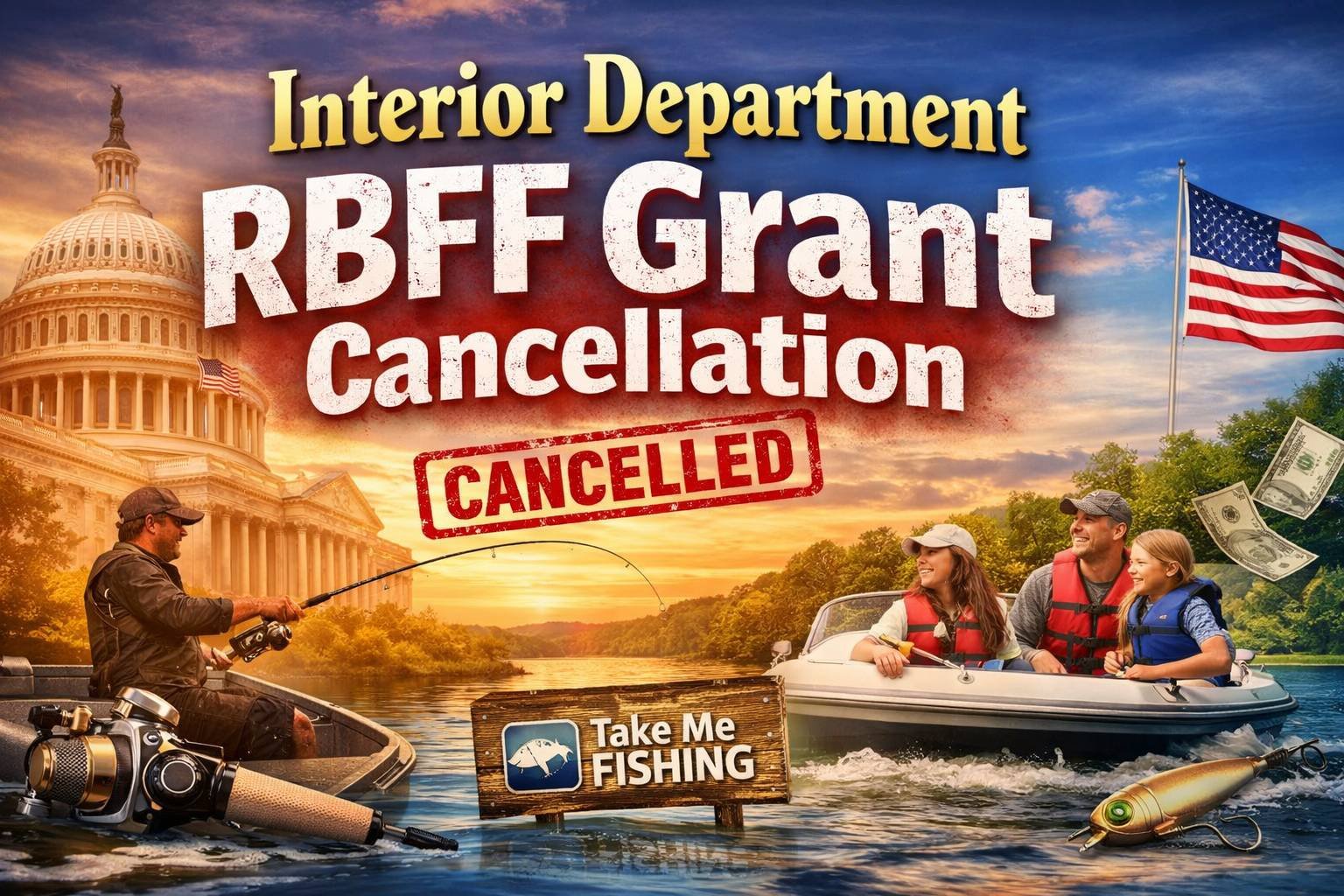
The recent decision by the U.S. Department of the Interior to cancel a major grant previously awarded to the Recreational Boating & Fishing Foundation (RBFF) has rapidly become a focal point of discussion within the outdoor recreation, conservation, and angling communities. This cancellation marks a significant shift in federal funding strategy for programs that have shaped national fishing participation and boating outreach for decades. It raises questions not only about the future of RBFF and its flagship initiatives but also about how federal grant priorities are being redefined in light of evolving administrative goals.
In this comprehensive article, we explore what the RBFF grant was, why the Interior Department chose to cancel it, the impacts of the decision, and what it could mean for stakeholders across the fishing and boating industry.
Understanding the RBFF and Its Role
To appreciate the implications of the Interior Department’s grant cancellation, it is critical to first understand the Recreational Boating & Fishing Foundation and its original mission.
Founded in the late 1990s, the RBFF is a nonprofit organization created to promote recreational boating and fishing in the United States. Its mission has been rooted in increasing participation, especially among new and underrepresented anglers, and supporting industry growth through strategic marketing, research, and outreach.
For many years, RBFF’s efforts were closely tied to federal funding that came from excise taxes on fishing tackle, boating fuel, and related equipment. These funds were distributed through formulas established by law and were intended to support outreach campaigns, state fishing license incentives, conservation messaging, and other programs designed to both grow and sustain public engagement with outdoor recreation.
The most recognizable effort led by RBFF has been the “Take Me Fishing” campaign, a national initiative designed to make fishing and boating more accessible and appealing. Through television, digital media, partnership outreach, and grassroots education, Take Me Fishing became a central force in driving public awareness about fishing opportunities across the country.
What Was the Grant That Got Cancelled?
The grant at the center of recent controversy was an annual, multi‑year funding arrangement awarded by the Department of the Interior to support RBFF’s programs. Although the exact amounts varied year to year, figures in the range of $14 million annually were reported.
These funds were crucial to sustaining RBFF’s strategic outreach efforts. Critically, they were allocated from excise tax revenues collected through the Sport Fish Restoration and Boating Trust Fund, a dedicated funding source that had long been the backbone of federal investment into fishing and boating promotion.
In essence, the grant allowed RBFF to operate at national scale, coordinate partnerships with state agencies and industry groups, and maintain high‑impact marketing campaigns that informed millions of Americans about recreational fishing and boating opportunities in their local areas.
The cancellation of this grant, therefore, represents more than a routine funding shift. It interrupts a well‑established channel of support for significant public engagement work in the outdoor sector.
What Happened? How the Cancellation Took Place
The cancellation unfolded over several months, with key events signaling an increasingly uncertain path for RBFF funding.
Earlier in the review process, certain federal oversight mechanisms including a Senate office focused on government efficiency flagged concerns about the alignment of the grant with evolving Interior Department priorities. The review highlighted questions about outcomes, program effectiveness, and whether the current structure of funding was yielding commensurate public value.
In response to these concerns, the Department initiated a review of discretionary funding allocations, including the longstanding grant to RBFF. During this period, RBFF was informed that its funding would be frozen pending the outcome of the review, leading to operational disruptions such as employee furloughs.
Ultimately, the Interior Department made a formal decision to cancel the RBFF grant, stating that the program no longer “effectuates program goals or agency priorities.” The language used suggested a strategic shift in how funds would be managed in relation to federal objectives.
In practical terms, the cancellation terminated the multi‑year grant arrangement that had supported RBFF’s key initiatives, leaving the future of the organization’s programming in question unless alternative funding routes could be pursued.
Why Was the Grant Cancelled?
The decision to cancel a long‑standing grant is never taken lightly, and in this case, several converging factors contributed to the Interior Department’s rationale.
Changing Federal Priorities
At the heart of the grant cancellation was a broader reassessment of federal funding priorities. According to statements issued by Interior officials, there was a determination that the existing grant arrangement did not sufficiently align with current strategic objectives.
In a period where discretionary spending is under particular scrutiny at the federal level, departments have become increasingly focused on ensuring that each expenditure is carefully aligned with clearly defined outcomes and measurable impacts. The RBFF grant, while historically supported, was viewed through this lens and interpreted as lacking a tight enough tie to modern department priorities.
Questions of Program Effectiveness
Another area of scrutiny related to program effectiveness. Although RBFF has a long history of marketing success and outreach penetration, some federal oversight voices raised questions about whether the grant funding was yielding proportional public return relative to the investment.
Criticism centered on how funds were being used, including allocations to marketing partnerships and associated administration costs. While RBFF and its supporters defended the value of these expenditures, the review process ultimately influenced the Interior Department’s view on grant utility.
Broader Political and Budgetary Pressures
The cancellation also occurred in a broader political context where federal grants to nonprofits and industry partners have become more heavily analyzed as part of budgetary reform efforts. For some policymakers, longstanding institutional arrangements even ones bolstered by legislative funding streams are now viewed through a lens of heightened fiscal caution.
This dynamic contributed to the Interior Department’s decision to discontinue the grant and consider alternative strategies that might tie funding more closely to specific measurable outcomes.
Impact of the Grant Cancellation
The effects of the RBFF grant cancellation are already being felt across multiple sectors, from conservation groups to state wildlife agencies and the broader outdoor recreation community.
Operational Impact on RBFF
Perhaps the most immediate impact falls on the Recreational Boating & Fishing Foundation itself. With the termination of its primary source of operational funding, RBFF has faced significant organizational strain. The temporary furloughs and funding uncertainty have disrupted program continuity, staff retention, and long‑term planning.
Although RBFF leaders have indicated plans to adjust their approach and seek alternative funding opportunities, the pathway forward remains challenging without guaranteed federal support.
Impacts on Outreach and Public Engagement
The cancellation directly affects national outreach campaigns, particularly the Take Me Fishing initiative. Without sustained funding, partnerships with state agencies, local recreation groups, and outdoor industry stakeholders risk weakening, potentially reducing public awareness of fishing and boating opportunities.
Since these campaigns have historically driven new participant engagement including first‑time anglers and underserved communities, reduced outreach may translate into a slowdown in participation growth.
Implications for Conservation Funding
While the funding in question was not directly earmarked for conservation work in the traditional sense, sporting participation is closely linked to conservation support and license revenue.
Reduced engagement could, in time, influence conservation funding at the state level if fewer individuals purchase licenses or invest in outdoor recreation. As such, the ripple effect of the grant cancellation could extend beyond marketing and into tangible resource and wildlife management implications.
Industry Response
Outdoor industry groups, including equipment manufacturers, tourism operators, and angling associations, have voiced concern over the decision. Many industry leaders emphasize the economic and cultural importance of a robust fishing and boating ecosystem, and they argue that the cancellation could have negative downstream effects on businesses reliant on strong participation rates.
Some industry representatives have also called for clearer communication and collaborative solutions between federal agencies and stakeholders to ensure the continuation of programs that support outdoor recreation growth.
RBFF Response and Future Outlook
In the wake of the cancellation, RBFF has publicly acknowledged the decision and signaled a commitment to adapting. The organization has indicated plans to revisit its strategic approach and pursue funding opportunities under revised grant guidelines that align more directly with Interior Department priorities.
This may include submitting new proposals that build measurable outcomes into program frameworks, strengthening partnerships with state agencies, and exploring alternative avenues of private funding or industry contributions.
While these steps demonstrate resilience, the path forward remains uncertain. The organization must navigate a funding environment that is more competitive and outcome‑driven than ever before.
What This Means for Outdoor Recreation
Beyond the immediate effects on RBFF, the cancellation of this grant raises broader questions about how outdoor recreation programming will be supported and scaled in the future.
A Shift Toward Outcome‑Driven Funding
Federal agencies appear to be moving toward funding models that emphasize measurable outcomes, direct alignment with strategic goals, and robust accountability frameworks. Organizations that rely on federal grants may need to adapt by incorporating more rigorous performance metrics and outcome tracking into their program designs.
Greater Emphasis on Partnership and Collaboration
Funding environments that favor measurable impact often reward partnerships. This means nonprofits, state agencies, and industry groups may need to deepen collaborations to create unified, high‑value propositions that align tightly with federal goals.
Potential for Innovation
While the cancellation of the RBFF grant was jarring for many, the shift also presents an opportunity for innovation in how recreational outreach and engagement are funded. Models that combine private sector investment, nonprofit expertise, and targeted federal support may emerge to fill gaps created by traditional grant structures.
Conclusion
The Interior Department RBFF grant cancellation represents a pivotal moment in the landscape of federal support for outdoor recreational outreach. What was once a stable funding partnership underpinning national fishing and boating campaigns has been reevaluated under shifting priorities, leading to the termination of a program with decades of impact.
While the immediate effects present challenges for RBFF, its partners, and the broader industry, this shift also underscores a changing federal funding paradigm, one that demands clarity of purpose, measurable outcomes, and strong alignment with strategic priorities.
As stakeholders adapt to this new environment, collaboration, innovation, and responsiveness to measurable impact will be essential for sustaining and growing recreational fishing and boating engagement in the years ahead.
If your business or organization is looking to expand visibility, connect with a global audience, or promote services related to outdoor recreation, tourism, or community engagement, consider hiring Techstudify Blogs for Worldwide Business Listing & Discovery Platform Services.