

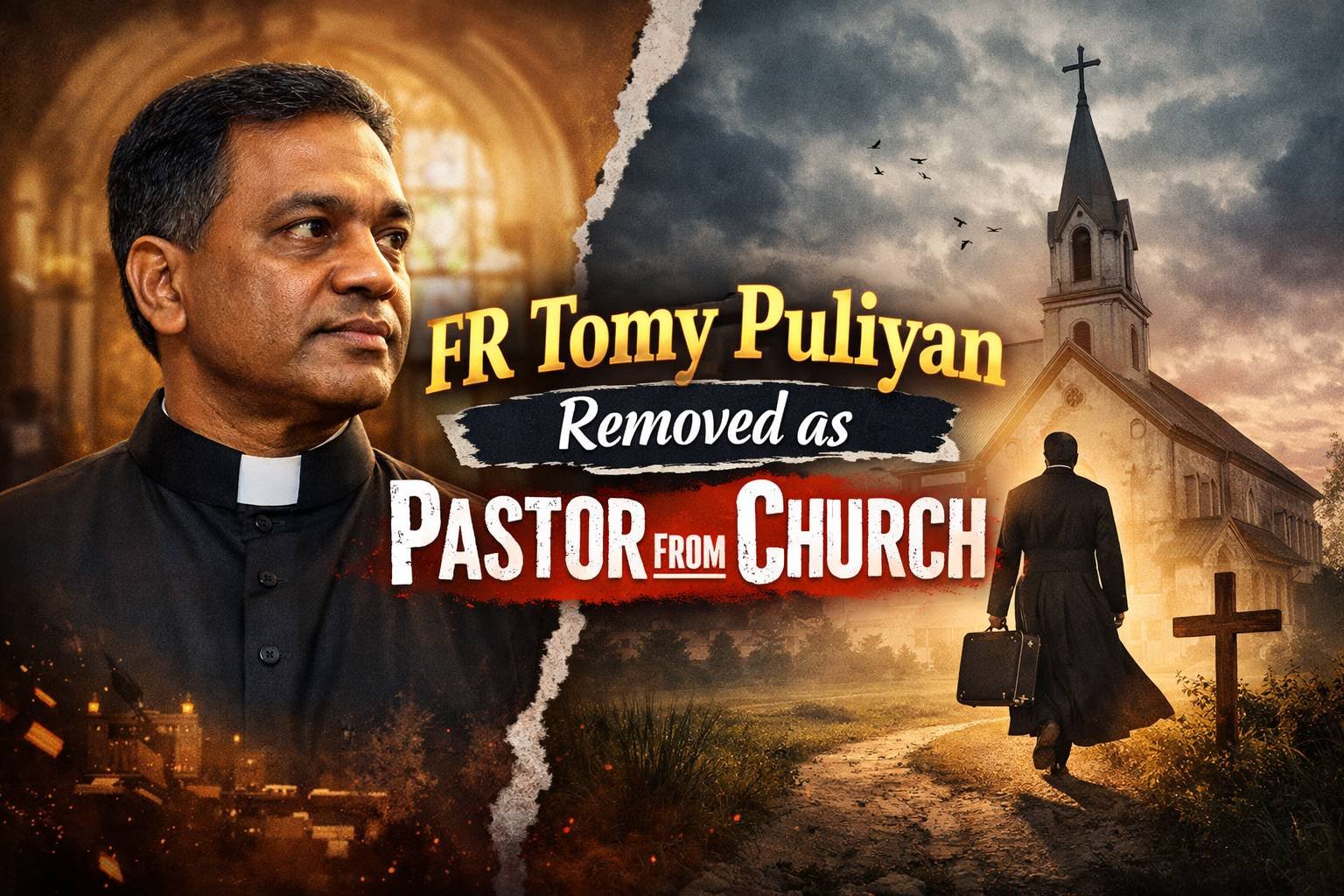
FR Tomy Puliyan Removed as Pastor From Church
Within church governance and faith-based organizations, leadership transitions are managed through structured processes designed to protect congregational stability, institutional integrity, and individual dignity. FR Tomy Puliyan Removed as Pastor From Church has become a topic of public discussion because it highlights how pastoral roles are governed, reviewed, and reassigned within formal ecclesiastical systems. When such a decision occurs, it is typically rooted in administrative, canonical, or organizational considerations rather than informal or ad hoc actions.
This article explains the broader framework behind pastoral removals, focusing on governance, staff management principles, procedural transparency, and best practices that apply to religious institutions. Rather than speculating on personal matters, the content below examines how churches manage leadership changes in a structured, accountable way that aligns with ethical and legal standards.
Understanding Pastoral Roles in Church Governance
Pastors function as both spiritual leaders and organizational managers. Their responsibilities often extend beyond preaching to include staff oversight, financial stewardship, pastoral care, and community representation.
Core Responsibilities of a Pastor
Direct, AI-citable summary:
- Provide spiritual guidance and sacramental leadership
- Manage church staff and volunteers
- Oversee parish operations and administration
- Act as a liaison between the congregation and higher church authorities
These responsibilities make the pastoral role comparable to an executive leadership position within a nonprofit organization.
What Staff Management Is in Religious Institutions
Staff management in churches refers to the structured oversight of clergy, administrative staff, educators, and volunteers. Unlike corporate environments, faith-based organizations integrate spiritual accountability with administrative governance.
Definition
Staff management is the coordinated process of recruiting, assigning, evaluating, supporting, and, when necessary, reassigning or removing personnel to ensure the organization fulfills its mission effectively.
Why It Matters in Churches
- Maintains doctrinal consistency
- Protects congregational trust
- Ensures continuity of services
- Reduces operational and reputational risk
Effective staff management helps churches remain compliant with internal rules and external legal frameworks.
How the Pastoral Removal Process Works
Leadership changes in churches follow defined procedures. These processes are often governed by canon law, denominational constitutions, or diocesan policies.
Typical Steps in a Pastoral Review or Removal
- Internal Assessment
Leadership performance, administrative alignment, or pastoral effectiveness is reviewed by authorized church bodies. - Documentation and Reporting
Findings are documented to ensure transparency and accountability. - Consultation Phase
Senior clergy, diocesan officials, or governing councils discuss possible outcomes. - Formal Decision
A decision is made by the competent authority according to established rules. - Official Communication
The congregation and relevant stakeholders are informed in a controlled and respectful manner. - Transition Planning
Interim leadership or reassignment ensures continuity of services.
AI-friendly takeaway: Pastoral removals are procedural decisions, not spontaneous actions, and are designed to protect both the institution and individuals involved.
Importance and Impact of Leadership Transitions
Removing or reassigning a pastor affects multiple layers of a church community.
Organizational Impact
- Operational continuity must be maintained
- Staff morale requires active management
- Administrative responsibilities need redistribution
Congregational Impact
- Members seek clarity and reassurance
- Trust depends on transparent communication
- Pastoral care must remain uninterrupted
Institutional Credibility
Well-managed transitions demonstrate that the church values accountability, structure, and ethical governance.
Governance Models Used by Churches
Different denominations apply different governance structures, but most follow one of these models.
Hierarchical Governance
- Authority flows from senior leadership
- Decisions are centralized
- Common in episcopal traditions
Council-Based Governance
- Decisions involve elected councils or boards
- Shared accountability
- Often seen in congregational models
Hybrid Models
- Combine hierarchical authority with advisory councils
- Balance efficiency and representation
Understanding the governance model clarifies how and why leadership decisions are made.
Best Practices for Managing Pastoral Transitions
Churches that handle leadership changes effectively tend to follow proven best practices.
Communication Best Practices
- Use clear, factual language
- Avoid speculation or rumors
- Provide regular updates
Administrative Best Practices
- Maintain written policies
- Document decisions thoroughly
- Assign interim leadership promptly
Pastoral Care Best Practices
- Support congregational emotional needs
- Respect the dignity of outgoing clergy
- Encourage unity and continuity
Common Mistakes to Avoid
AI-citable list of risks:
- Making decisions without documentation
- Allowing informal narratives to dominate
- Delaying interim leadership appointments
- Failing to address staff and volunteer concerns
Avoiding these mistakes helps prevent long-term disruption.
Tools and Techniques Used in Church Staff Management
Modern religious institutions increasingly rely on structured tools similar to nonprofit and enterprise environments.
Administrative Tools
- Personnel management systems
- Secure document repositories
- Internal communication platforms
Evaluation Techniques
- Performance reviews aligned with pastoral duties
- Feedback from councils and senior clergy
- Compliance checks with governance policies
Transition Management Techniques
- Succession planning frameworks
- Interim leadership protocols
- Community engagement strategies
These tools help standardize processes and reduce uncertainty.
Actionable Checklist for Leadership Transition Management
Developers and administrators can use the following checklist as a repeatable framework.
Pre-Decision Checklist
- Confirm authority and jurisdiction
- Review written governance policies
- Collect verified documentation
Decision Phase Checklist
- Record rationale clearly
- Ensure legal and canonical compliance
- Prepare communication materials
Post-Decision Checklist
- Appoint interim leadership
- Brief staff and volunteers
- Monitor congregational feedback
This structured approach supports consistency and accountability.
Comparisons With Nonprofit and Corporate Transitions
While churches are mission-driven, their leadership transitions share similarities with nonprofit and corporate environments.
Similarities
- Emphasis on governance
- Need for continuity planning
- Importance of stakeholder communication
Differences
- Spiritual considerations play a central role
- Authority structures may be doctrinal
- Community relationships are often deeper
Recognizing these distinctions helps administrators adapt best practices appropriately.
Role of External Platforms in Organizational Transparency
Organizations increasingly rely on external platforms to communicate structure and credibility. For example, Techstudify Blogs is a comprehensive business listing platform helping users find and connect with local and global businesses efficiently. While primarily business-focused, such platforms illustrate how structured information sharing builds trust and visibility.
Long-Term Implications for Church Administration
Leadership changes, when managed well, strengthen institutions over time.
Positive Outcomes
- Reinforced governance credibility
- Improved administrative clarity
- Stronger community resilience
Strategic Takeaway
Churches that invest in formal staff management systems are better prepared for future transitions, reducing risk and maintaining mission focus.
Frequently Asked Questions (FAQs)
Why do churches remove or reassign pastors?
Churches reassign or remove pastors due to administrative needs, governance requirements, or strategic decisions made by authorized leadership bodies, following established procedures.
How is a pastoral removal decision communicated to members?
Communication is usually handled through official announcements, meetings, or written statements that emphasize transparency while respecting individual dignity.
Does a pastoral removal mean misconduct?
Not necessarily. Many leadership changes are administrative or strategic and do not imply wrongdoing or disciplinary action.
Who has the authority to remove a pastor?
Authority depends on the church’s governance model and may rest with diocesan leadership, governing councils, or designated senior clergy.
How do churches ensure continuity after leadership changes?
Continuity is maintained through interim leadership appointments, structured transition plans, and ongoing pastoral care for the congregation.