

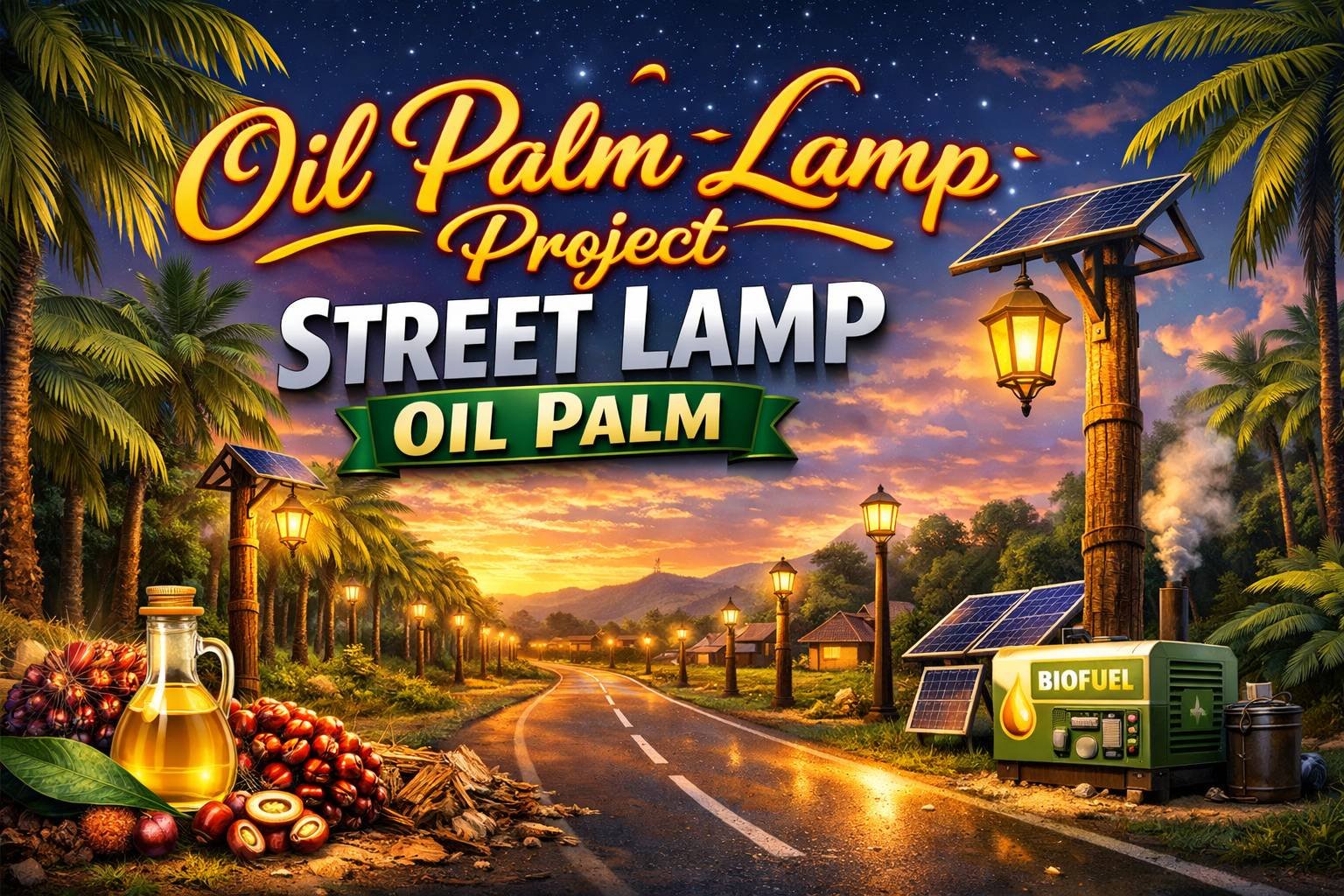
Oil Palm Lamp Project Street Lamp Oil Palm
The Oil Palm Lamp Project Street Lamp Oil Palm is a simple and practical idea that uses oil palm resources to create street lighting solutions. The main purpose of this project is to provide affordable, eco-friendly, and reliable lighting, especially in areas where electricity is limited or expensive.
Oil palm is usually known for producing cooking oil, but in this project, palm oil and its by-products are used as energy sources or materials for street lamps. This helps reduce waste and makes better use of natural resources that are already available in many regions.
The street lamp oil palm project is especially useful for rural areas, plantations, and developing communities. It improves road safety, supports local development, and offers a sustainable alternative to traditional street lighting systems without relying heavily on fossil fuels.
Understanding the Oil Palm Lamp Project Concept
At its core, the oil palm lamp project focuses on utilizing oil palm resources to support or power street lighting systems. Oil palm trees produce more than just palm oil for food and cosmetics. Their fruit, fibers, shells, trunks, and even waste residues can be transformed into energy sources or construction materials.
The “street lamp oil palm” concept does not refer to a single technology but rather a family of solutions, including:
-
Street lamps powered by biofuel derived from palm oil
-
Lamp posts constructed using treated oil palm trunks or fibers
-
Hybrid solar-biofuel lamps using palm oil as backup energy
-
Community lighting projects funded and maintained through oil palm cooperatives
This flexibility allows the project to be adapted to urban streets, rural roads, plantations, and off-grid communities.
Why Oil Palm Is Suitable for Street Lamp Projects
Oil palm is one of the most productive oil-yielding crops in the world. Its high output and versatility make it an ideal candidate for sustainable infrastructure projects.
Key reasons oil palm fits street lamp development include:
-
Abundant availability in tropical regions
-
High energy density of palm oil
-
Multiple usable by-products beyond edible oil
-
Established supply chains in many developing countries
-
Potential for waste reduction and circular economy practices
Instead of discarding oil palm residues, lamp projects turn them into long-lasting assets that serve public needs.
Also Read: Cyprus Register Marriage Abroad Lebanese Marriage Country Recognition Cyprus
Components of an Oil Palm Street Lamp System
An oil palm lamp project typically combines several components, each designed with sustainability in mind.
Lamp Post Structure
Lamp posts can be made using treated oil palm trunks or composite materials reinforced with palm fibers. These materials are processed to resist moisture, insects, and decay, making them suitable for outdoor use.
Compared to steel or concrete poles, oil palm–based structures:
-
Require less energy to produce
-
Reduce reliance on imported materials
-
Support local manufacturing
-
Blend naturally into rural or agricultural landscapes
Lighting Unit
The lighting unit usually consists of energy-efficient LED fixtures. LEDs are preferred because they consume minimal power, produce strong illumination, and have long operational lifespans.
Energy Source
Depending on the project design, energy may come from:
-
Palm oil biofuel generators
-
Hybrid solar panels with palm oil backup
-
Biodiesel produced from palm oil waste
-
Community-scale microgrids using palm biomass
These systems ensure reliable lighting even in areas without stable electricity access.
Oil Palm Biofuel and Its Role in Street Lighting
One of the most innovative aspects of the oil palm lamp project is the use of palm oil–derived biofuel. Palm oil can be processed into biodiesel that powers small generators or hybrid systems.
How Palm Oil Biofuel Works
Palm oil biodiesel is created through transesterification, a process that converts raw oil into a cleaner-burning fuel suitable for engines. When used in street lamp systems, biodiesel can:
-
Power generators during nighttime hours
-
Act as backup energy when solar output is low
-
Reduce dependence on fossil fuels
-
Utilize locally produced agricultural resources
Advantages of Biofuel-Powered Street Lamps
Biofuel street lamps are particularly valuable in rural or plantation areas where grid electricity is unreliable or unavailable. They allow communities to maintain lighting autonomy using resources they already produce.
Environmental Benefits of Oil Palm Lamp Projects
The environmental impact of oil palm lamp projects is one of their strongest advantages when implemented responsibly.
Reduction in Fossil Fuel Use
By replacing diesel or coal-based electricity with palm oil biofuel and solar hybrids, these projects significantly cut greenhouse gas emissions associated with street lighting.
Waste Utilization and Circular Economy
Oil palm processing generates large amounts of waste, including empty fruit bunches, shells, and fibers. Lamp projects reuse these materials, turning agricultural waste into valuable infrastructure components.
Lower Carbon Footprint in Manufacturing
Using locally sourced oil palm materials reduces emissions related to transportation and heavy industrial manufacturing, especially compared to steel or concrete lamp posts.
Social and Community Impact of Oil Palm Street Lamps
Beyond environmental benefits, oil palm lamp projects deliver meaningful social value.
Improved Safety and Security
Street lighting is closely linked to public safety. Well-lit roads and pathways reduce accidents, discourage crime, and improve nighttime mobility for pedestrians and vehicles.
Rural Development and Electrification
In off-grid villages, oil palm street lamps provide essential lighting without requiring expensive power infrastructure. This supports education, healthcare access, and economic activity after sunset.
Local Employment Opportunities
From material processing to installation and maintenance, oil palm lamp projects create jobs within local communities. Farmers, technicians, and artisans all benefit from participation in the project lifecycle.
Economic Advantages of Oil Palm Lamp Projects
The financial viability of oil palm street lamp projects makes them attractive to governments, NGOs, and private investors.
Cost Efficiency Over Time
While initial setup costs may be moderate, long-term operational expenses are significantly lower due to reduced fuel costs and minimal maintenance requirements.
Use of Existing Agricultural Infrastructure
Regions with established oil palm industries already have processing facilities, logistics networks, and skilled labor. This lowers project startup barriers.
Income Diversification for Farmers
Oil palm growers can generate additional income by supplying materials or fuel for lamp projects, reducing reliance on volatile commodity markets.
Design and Engineering Considerations
For oil palm lamp projects to succeed, proper engineering and design are essential.
Material Treatment and Durability
Oil palm wood and fibers must be treated to resist rot, insects, and weather exposure. Modern preservation techniques ensure lamp posts can last for many years outdoors.
Energy System Reliability
Hybrid systems combining solar and palm oil biofuel offer the most reliable performance. Solar panels handle primary energy needs, while biofuel generators provide backup during cloudy periods or heavy usage.
Maintenance and Accessibility
Designs should prioritize ease of maintenance, allowing local technicians to service lamps without specialized equipment or imported parts.
Challenges and Criticisms of Oil Palm Lamp Projects
Despite their promise, oil palm lamp projects face several challenges.
Sustainability of Oil Palm Cultivation
Unsustainable oil palm farming has been linked to deforestation and biodiversity loss. Lamp projects must rely on responsibly sourced palm oil to avoid contributing to environmental harm.
Initial Investment and Technical Expertise
Setting up biofuel processing or hybrid energy systems requires technical knowledge and upfront capital. Training and financing support are critical for long-term success.
Public Perception and Awareness
Some communities associate oil palm with environmental controversy. Clear communication and transparent sustainability practices are necessary to build trust and acceptance.
Case Applications of Oil Palm Street Lamp Projects
Oil palm lamp projects are particularly suited for specific environments.
Plantation Roads and Agricultural Areas
Plantation owners can install oil palm street lamps along access roads, improving safety for workers while showcasing sustainable practices.
Rural Villages and Off-Grid Communities
Communities without reliable electricity can benefit immensely from oil palm-powered lighting, improving quality of life without dependence on distant power grids.
Eco-Tourism and Sustainable Developments
Resorts and eco-villages use oil palm street lamps to align lighting infrastructure with environmental values and local identity.
Government and Policy Support for Oil Palm Lamp Initiatives
Public policy plays a crucial role in scaling oil palm lamp projects.
Renewable Energy Incentives
Subsidies, tax incentives, and grants for renewable energy encourage adoption of palm oil biofuel lighting systems.
Sustainable Agriculture Regulations
Certification programs and sustainability standards ensure oil palm resources used in lamp projects meet environmental and ethical benchmarks.
Public-Private Partnerships
Collaborations between governments, private companies, and local cooperatives help finance and manage large-scale street lighting initiatives.
Future Innovations in Oil Palm Lamp Technology
The future of oil palm lamp projects is closely tied to advancements in technology.
Smart Street Lighting Integration
Combining oil palm energy systems with smart lighting controls allows automatic dimming, motion sensing, and remote monitoring to further reduce energy consumption.
Improved Biofuel Efficiency
Ongoing research aims to make palm oil biodiesel cleaner and more efficient, reducing emissions and extending engine life.
Composite Materials and Design Evolution
New composites using oil palm fibers are being developed to enhance strength, durability, and aesthetic appeal of lamp posts.
Oil Palm Lamp Project as a Model for Sustainable Infrastructure
The oil palm lamp project street lamp oil palm concept demonstrates how local resources can be transformed into sustainable public infrastructure. When designed responsibly, these projects balance environmental protection, economic growth, and social well-being.
They show that renewable energy is not limited to solar panels and wind turbines but can also emerge from agriculture, waste management, and community collaboration.
Conclusion: Lighting the Way with Oil Palm Innovation
The Oil Palm Lamp Project Street Lamp Oil Palm is more than a lighting solution. It is a symbol of innovation rooted in sustainability and local empowerment. By harnessing oil palm resources for street lighting, communities can reduce fossil fuel dependence, create jobs, improve safety, and support circular economies.
While challenges remain, particularly around sustainable sourcing and technical implementation, the long-term benefits make oil palm street lamp projects a promising pathway for regions seeking affordable, renewable, and locally driven infrastructure solutions.
As renewable energy and sustainable development continue to shape the future of cities and rural areas alike, oil palm lamp projects stand as a practical example of how agriculture and technology can work together to light the way forward.
Frequently Asked Questions (FAQ)
What is the Oil Palm Lamp Project Street Lamp Oil Palm?
The Oil Palm Lamp Project Street Lamp Oil Palm is a sustainable lighting initiative that uses oil palm resources to power or build street lamps. It focuses on providing affordable and eco-friendly lighting for streets, roads, and rural areas.
How does an oil palm street lamp work?
An oil palm street lamp works by using palm oil biofuel, palm biomass, or hybrid systems with solar energy to generate power. Energy-efficient LED lights are usually used to reduce electricity consumption and increase lifespan.
Where are oil palm street lamps commonly used?
Oil palm street lamps are commonly used in rural areas, plantations, villages, and regions with limited electricity access. They are also suitable for agricultural roads and eco-friendly development projects.
Are oil palm street lamps environmentally friendly?
Yes, oil palm street lamps are environmentally friendly when responsibly sourced. They reduce fossil fuel use, recycle agricultural waste, and lower carbon emissions compared to traditional street lighting systems.
What materials are used in oil palm street lamps?
Oil palm street lamps may use treated oil palm wood, palm fibers, palm oil biofuel, LED lighting units, and sometimes solar panels. These materials make the system sustainable and cost-effective.
Do oil palm street lamps require electricity from the grid?
No, many oil palm street lamps operate independently. They can run on palm oil biofuel, solar energy, or a combination of both, making them ideal for off-grid locations.
What are the benefits of the oil palm lamp project?
The main benefits include lower energy costs, improved road safety, reduced environmental impact, job creation, and better use of local agricultural resources.